
The Energy Crisis No One Is Talking About
The world is running on low battery.
Everywhere you look, people are stretched thin.
Not just tired. Drained.
Not just busy. Overloaded.
Not just stressed. Energetically depleted in a way that feels deeper than anything we’ve seen in the last decade.
The signs are everywhere:
attention spans collapsing
emotional bandwidth shrinking
anxiety rising
teams struggling to stay motivated
leaders feeling the weight of constant change
employees disengaging even when they care
organizations moving faster than humans can process
We’re living through a moment defined by acceleration: AI, economic uncertainty, cultural shifts, nonstop communication, and a pace of change that outstrips human capacity. People are hitting their limits as the world continues to pull more energy from them than they’re able to replenish.
This is the crisis shaping the modern workplace.
And almost no one is naming it.
The Modern Workplace Is Experiencing an Energy Collapse
Work has become a place where people are expected to:
make decisions faster
process more information
stay emotionally regulated
collaborate across time zones
adapt to constant change
perform at high levels
remain “on” at all times
The human nervous system wasn’t built for this pace.
Motivation is slipping as energetic capacity shrinks. Disengagement rises when the energy required to participate exceeds the energy people have available.
This depletion shows up in ways leaders often misinterpret:
shorter tempers
slower thinking
reduced creativity
lower resilience
decision fatigue
emotional withdrawal
inconsistent performance
These shifts in behavior point directly to an energy drain that’s shaping how people show up.
The Hidden Forces Draining Today’s Workforce
The biggest energy drains in today’s world come from forces that build quietly over time. They're subtle, constant, and cumulative:
endless notifications
reactive leadership
unclear expectations
meetings that drain instead of energize
values that don’t match behavior
emotional labor that goes unacknowledged
pressure to perform without space to recover
cultures built on urgency instead of intention
People are losing energy in places leaders don’t measure, and the cost is enormous.
This is the part of the conversation that’s been missing.
Until now.
Where Rebecca Ahmed Enters the Story
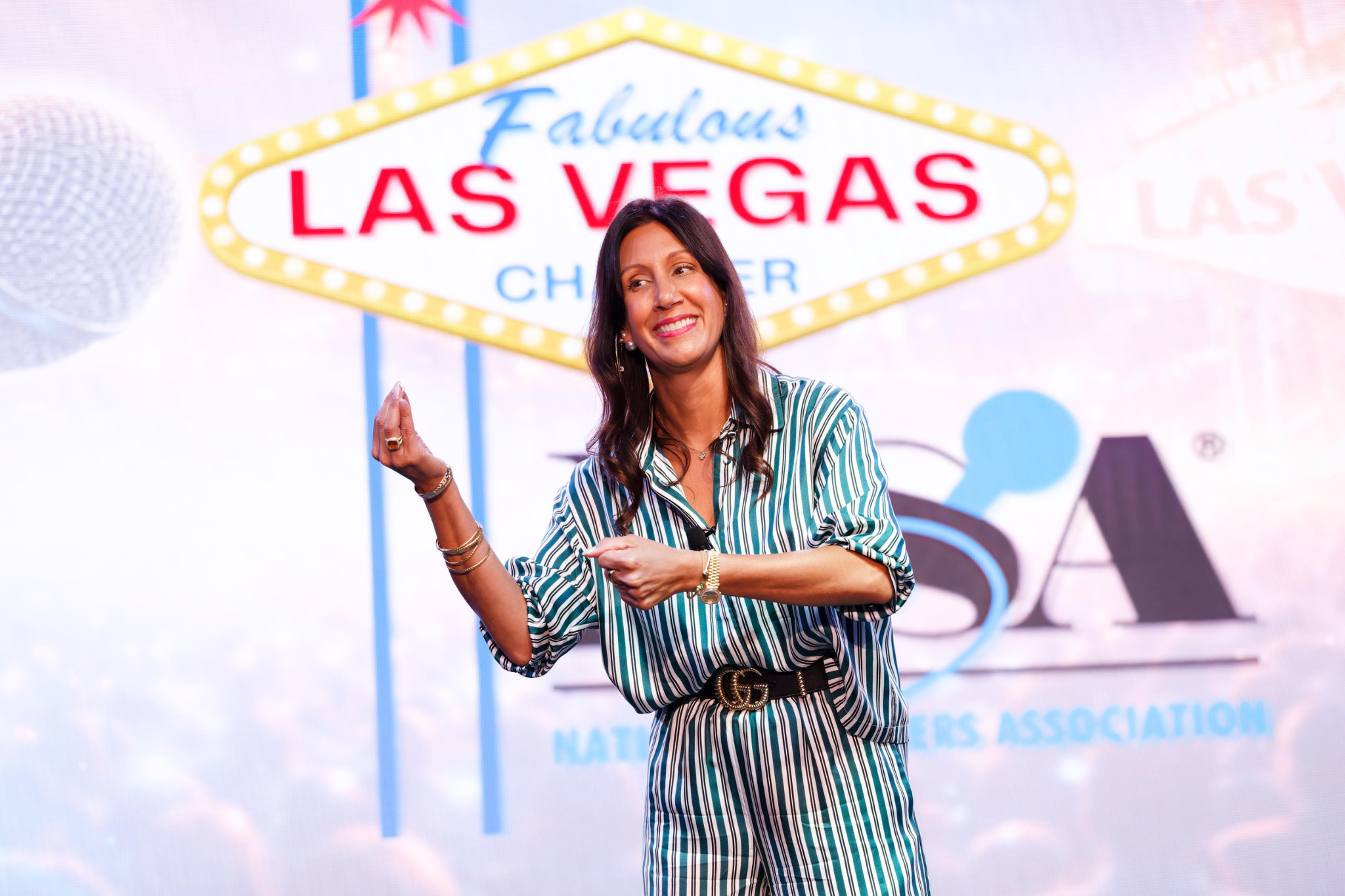
Rebecca Ahmed has been studying energy long before the workplace recognized it as a defining force in human performance. Her perspective is shaped by more than two decades inside one of the most demanding environments in the world: Las Vegas hospitality. Her work positions energy as a leadership asset — something measurable, trainable, and essential to how people think, decide, collaborate, and lead. She spent 13 years opening luxury properties, leading People Services teams, and navigating the nonstop energy of casinos, hotels, and entertainment venues. She helped launch major resorts and guided teams through high‑pressure operations, including opening properties during the pandemic, a moment when the industry had to rebuild itself overnight.
She treats energy as a strategic advantage. In 2021, she became the Chief Energy Officer at Caesars Entertainment, leading bi‑monthly leadership summits across 55+ U.S. properties and seeing firsthand how energy influences culture, guest experience, and team performance at scale.
Her frameworks give leaders a clear understanding of how energy shapes behavior, communication, and culture, especially in environments defined by rapid change, high stakes, and nonstop demand - the exact conditions she spent years navigating in hospitality.
Rebecca’s focus is energy literacy, the skill leaders need most in a world defined by overload, acceleration, and constant demand.
Energy influences how humans show up mentally, emotionally, and physically.
Low energy creates friction across teams and organizations.
Aligned energy strengthens clarity, resilience, and momentum.
Rebecca teaches leaders how to:
identify energy leaks
convert destructive energy into constructive momentum
regulate their own energy before influencing others
align values with daily behavior
build cultures that energize people
replace urgency with intention
create teams that stay grounded under pressure
Her work blends behavioral science, coaching psychology, and the Energy Leadership Index™ methodology, giving leaders a practical system for navigating the modern workplace with steadiness and clarity.
Rebecca’s focus is energy literacy: the skill leaders need most in a world defined by overload, acceleration, and constant demand.
Why Her Work Matters Right Now
The future of work is being shaped by leaders who understand how human energy influences performance, culture, and decision‑making. Organizations are moving through a period defined by acceleration, uncertainty, and emotional overload, and the systems built a decade ago no longer match the demands of today’s workplace.
Rebecca’s work gives leaders a language for what people are experiencing and a framework for responding with clarity. She offers tools that help teams navigate pressure, regulate their energy, and rebuild the way they work in a world where constant demand has become the norm.
Her approach provides a blueprint for the next era of leadership, one where energy becomes a foundation for resilience, collaboration, and well‑being. As workplaces continue to evolve, her insights offer a path forward that strengthens both people and performance.
Rebecca is helping leaders create environments where energy is protected, restored, and used with intention, a shift that will define the organizations built to thrive in the years ahead.
